Does your rail sag and your shelves spill over? Here’s how to organize a small closet: empty it, keep only what you wear, then use every inch of height, wall and door.
This guide is part of our home living series of practical, room-by-room advice.
| Item | Value |
|---|---|
| Shirts a canvas hanging bag holds when hung | 12 shirts |
| Shirts the same bag holds when folded | 60 shirts |
| Seasonal wardrobe swap | Every few months |
| Decluttering pace | One small area at a time |
| What belongs in the main bedroom closet | The things you use the most |
These figures come from Sunset’s small closet advice and Livingetc’s small closet guide. They can change, so check the sources before you rely on them.
Empty the closet and edit what goes back
Take all your clothes out so you can see everything in one go, as Homes & Gardens advises. While the closet is bare, dust the shelves and rails before anything returns.
Livingetc quotes organizer Lucy Williams, who says to tackle one small area at a time rather than the whole closet in a single sitting. A shelf, a drawer or one section of hanging space is a realistic session, and it keeps the job from feeling overwhelming (Livingetc).
As you pick up each item, decide where it belongs:
- Keep: pieces you wear and like, which are the only things that go back in.
- Donate: clothes that are in good shape but no longer suit you.
- Throw away: anything worn out or beyond repair.
Professional organizer Olivia Parks, quoted by Homes & Gardens, calls sorting each item into keep, donate or throw away essential for a closet that works.
If you love everything you own, a full cull is not essential. Another Homes & Gardens guide says decluttering helps, but you can still fit a large wardrobe into a small space with better storage.
Fold, hang and layer to fit more clothes
Professional organizer Amanda Titchenal says folding can free up far more room than hanging. In her example, canvas hanging bags might hold 12 shirts when hung, but you could fit 60 shirts if you fold them (Sunset).
She suggests folding bulky items such as hoodies, denim and sweaters, then putting them on a shelf, in a drawer or in a hanging closet organizer. Livingetc adds that clothes that won’t crease can be folded and stood vertically in drawers, so you can see every piece.
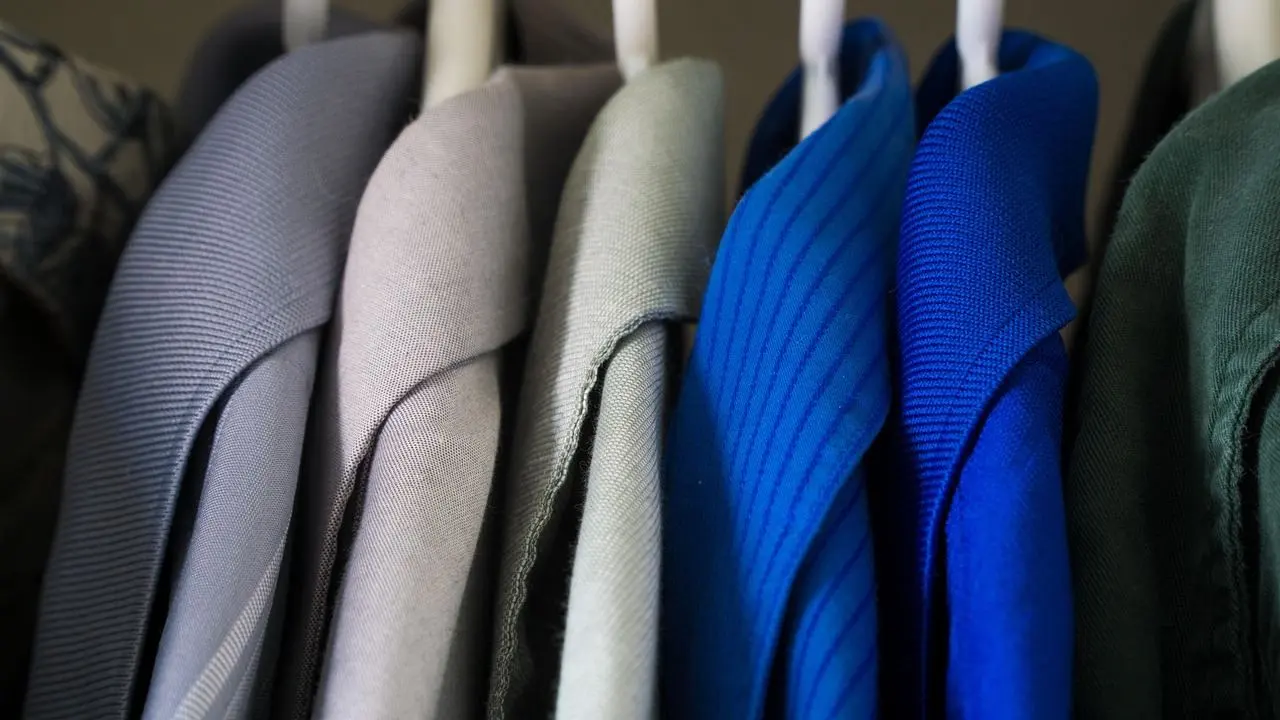
Save the rail for delicate, wrinkle-prone pieces:
- Blouses
- Dresses
- Slacks
- Business attire
Hangers matter too. Titchenal recommends slim, uniform hangers because mismatched thicknesses don’t sit neatly side by side, and Homes & Gardens points to layered hangers that hold multiple items at once (source).
Use height, doors and dead wall space
Most small closets waste their vertical space. If there is a big gap above or below your clothes, add shelves or stacking boxes to use that height, as suggested by Homes & Gardens.
These spots often go unused:
- Inside of the door: wall hooks work well there, according to organizer Vicky Silverthorn in Livingetc.
- Dead wall space: Titchenal says hooks can hold a handbag, robe, jacket, backpack or hats (Sunset).
- Below short hanging clothes: Silverthorn suggests an extra rail if you have space there but few long garments.
- The top shelf: Titchenal sometimes stacks shoe shelves up there to hold things that aren’t shoes.
Zones help you find things quickly. Organizer Nicole Gabai put her in-season clothes in zone one, in the closet and the drawers below, and kept out-of-season items in milk crates stacked high above the closet (Homes & Gardens).
Be choosy about add-ons. Silverthorn warns you to think carefully before ordering gimmicky inserts that may hinder rather than help.
What should live somewhere other than the closet?
Your main bedroom closet should hold the things you use the most, and secondary spaces should hold the rest, says Titchenal in Sunset. She also advises keeping dresser drawers for daily garments such as pajamas, workout wear, underwear and socks, rather than for beanies, scarves and swimsuits.
For off-season clothes, organizer Brenda Scott suggests clear totes on a top shelf, in another closet or in a separate storage room (Homes & Gardens). Livingetc suggests boxes under the bed or in a loft, and vacuum bags to shrink them first.
If the closet has room for both seasons, Homes & Gardens says to keep warm clothing on one side of the rail and cooler clothing on the other.
Shoes are the other big space-taker. Ben Kuhl of Shelf Expression says they can occupy a significant amount of space in small closets, especially seasonal pairs, and suggests hallway shoe storage units so they’re right by the door (Homes & Gardens).
If you truly must keep everything, organizer JP Taxman says to use bins and a storage unit, the garage or attic, or a dresser if your bedroom has room for one. Once the closet stops swallowing the room’s overflow, a spare shelf may suit a plant, and our guide to indoor plants for beginners can help you choose one.
Which organizing rules can you break?
Sorting by color looks pretty, but Homes & Gardens says it tends to be pointless in a small closet. Its alternative is to group clothes by type, such as jeans with jeans and separate from dress pants (source).
Experts also disagree on matching hangers. The same source calls the matching-hanger rule a bit of a myth in tiny closets, because one style can’t suit every garment, while Titchenal prefers slim, uniform ones. Try both and keep whichever fits more.
Perfection isn’t the goal. JP Taxman reminds readers that a small closet doesn’t have to be perfect the first time, so keep tweaking until it works for you (Homes & Gardens).
When the closet works, the next room is easy to tackle. Our guide on how to save on energy bills at home is a practical place to go from here.
Frequently asked questions
Should I fold or hang clothes in a small closet?
Show answer
Split them by fabric. Jeans, hoodies and sweaters sit happily on a shelf or in a drawer, while blouses, dresses and slacks need the rail to stay smooth.
Do I have to get rid of clothes to make a small closet work?
Show answer
Not always. Zones, layered hangers and shelves or boxes in unused height can make room without a big cull, though a tidy-up of duplicates and unworn pieces still helps.
How often should I swap seasonal clothes?
Show answer
Livingetc advises rotating your wardrobe every few months, so winter coats aren’t hogging the rail in midsummer. Store the swapped-out pieces in totes, vacuum bags or under the bed.
Where should shoes go if the closet is tiny?
Show answer
Move them out if you can. A hallway unit works well, and Sunset’s Titchenal also mentions over-the-door organizers, stacking shelves and hanging shoe bags as options inside a small closet.